
Certified Flight Instructor Training
Turn your flying experience into the skills and confidence to teach the next generation of pilots.
Program Overview
Turn Your Flying Skills Into Teaching Skills
Certified Flight Instructor training prepares you to teach others to fly and pursue your initial flight instructor certificate. Designed for commercial pilots ready to take the next step, this program develops the teaching skills, aeronautical knowledge, and flight proficiency needed to guide student pilots.
At Sevin Aviation, CFI training focuses on becoming a capable, confident instructor. Expect personalized ground and flight instruction, lesson presentation practice, and opportunities to explain and demonstrate maneuvers from the instructor’s seat. Your training builds toward practical test readiness and the responsibilities of teaching future pilots.
- Develop clear, effective teaching skills
- Learn to build and deliver organized lessons
- Strengthen flight demonstrations and student evaluation
- Prepare for your initial CFI practical test
Prerequisites
Applicants should hold a commercial or airline transport pilot certificate with airplane single-engine land and instrument ratings. You must be at least 18 to earn the instructor certificate and meet FAA English-language requirements. We’ll review your experience and applicable medical qualifications before flight training.
FAA Requirements
Complete the required ground and flight training, pass the Flight Instructor Airplane and Fundamentals of Instructing knowledge tests unless an exemption applies, and obtain the required endorsements, including spin training. Applicants must have at least 15 hours as pilot in command in the appropriate aircraft category and class and pass the CFI practical test.
Training Format
Personalized ground instruction, flight training, and independent study develop your skills as an instructor. Training includes lesson planning, practice teaching, maneuver demonstrations, and recognizing student errors. Your pace depends on preparation, proficiency, and scheduling.
Program Outcome
Prepare to earn your flight instructor certificate with an airplane single-engine rating. After passing the FAA practical test, you’ll be qualified to provide flight instruction within your certificate privileges and applicable FAA requirements.
Program Curriculum
What You'll Learn

Stage 1 - Fundamentals of Instructing (FOI)
Learn how people learn and how to teach effectively. Explore learning styles, communication, instructional techniques, and ways to help students build knowledge, confidence, and sound judgment.

Stage 2 - Ground Lessons
Prepare organized ground lessons for the major flight training topics. Practice turning aviation knowledge into clear explanations, using teaching aids, and presenting lessons that connect classroom concepts to practical flying.
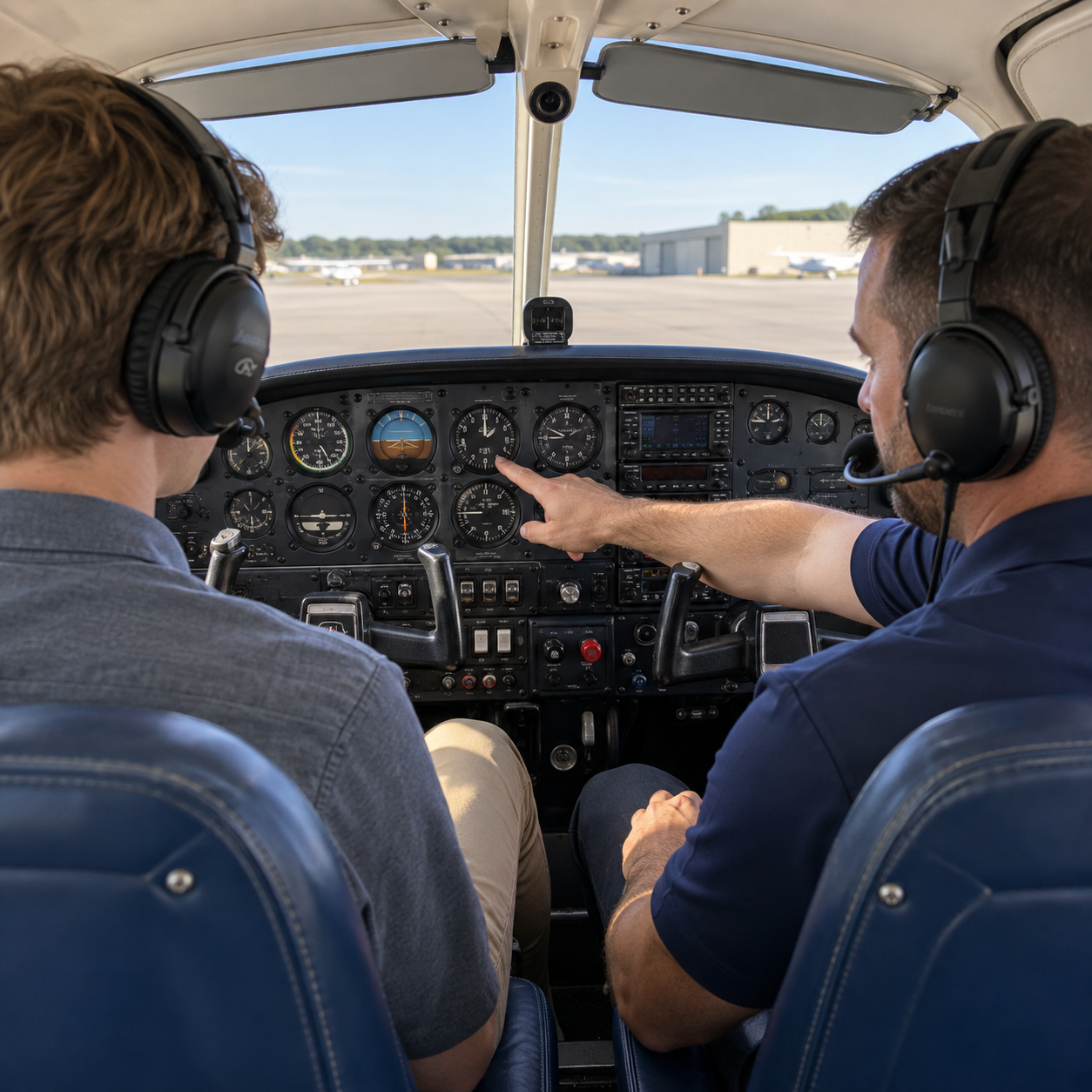
Stage 3 - Flight Lessons
Develop proficiency flying from the right seat, then learn to teach from that position. Practice explaining and demonstrating maneuvers, monitoring student performance, and providing timely feedback while maintaining safe control of the aircraft.

Stage 4 - Practical Test Prep
Bring your knowledge, teaching skills, and flight proficiency together for the CFI practical test. Refine lesson presentations, practice answering examiner questions, and work through flight demonstrations to identify areas that need additional preparation.

Student Evaluation and Feedback
Learn to assess a student’s understanding, recognize errors, and provide constructive feedback. Practice adapting your instruction to individual needs and deciding when a student is ready to progress.

Instructor Responsibilities and Professionalism
Explore the responsibilities that come with teaching others to fly. Develop good habits in lesson preparation, recordkeeping, endorsement decisions, risk management, and professional communication with students.
Train With Us. Interview With Us.
Students who complete all of their flight training through CFII at Sevin Aviation are guaranteed an interview for a flight instructor position. Employment offers depend on current hiring needs, qualifications, and interview performance.
